When Is the Best Time to Take Fish Oil?
 Reading time: 5 min
Morning with breakfast? Before bed? Before the gym? Fish oil timing generates surprisingly strong opinions for a question with a fairly settled answer.
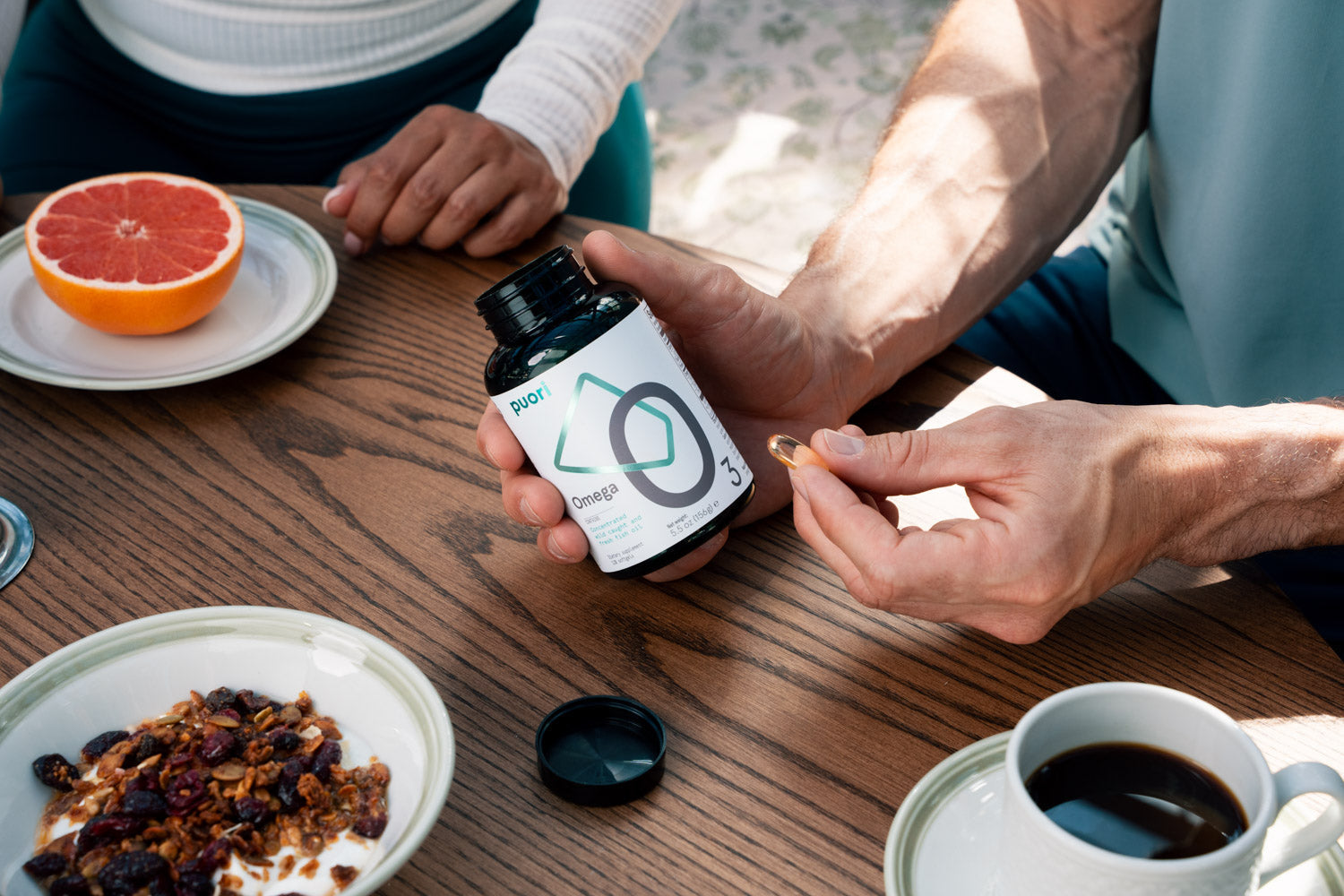
The best time to take fish oil is with a meal that contains fat: morning, lunch, or dinner. There is no single right hour of the day. Many choose to pair their omega-3 intake with dietary fat like eggs, avocado, or olive oil, especially in the evening meal. But there is no best time, consistency over weeks matters far more than the clock.
Why it matters: fish oil and fat absorption
Research on omega-3 concentrates shows absorption can improve when they're taken with a fat-containing meal compared with a low-fat one.
The absorption chain could explain why. Omega-3 fatty acids need bile and fat-digesting enzymes to be broken down and carried into your bloodstream, and your body releases those in response to fat in a meal. A fat-containing meal switches the machinery on.
Quality shapes the outcome, too. Oxidized (rancid) fish oil is more likely to cause the classic side effects and delivers less of what the label promises. Puori O3 is IFOS 5-star certified, tested for freshness, purity, and omega-3 content on every batch, with results you can check via the QR code on the label.
Morning, afternoon, or night: which works best?
Any of the three works. The research does not support a meaningful difference in outcomes based on time of day alone. What separates a good routine from a poor one is the meal, not the hour.
- Morning suits people who eat a real breakfast with fat, and it is the easiest slot for habit-building if you already take supplements in the morning.
- With your largest meal gives the best absorption window, since it is usually the most fat-rich meal of the day.
- Evening works well for people prone to reflux or fishy aftertaste; you sleep through the digestion.
How to avoid side effects
- Fishy burps: caused by oil floating on top of stomach contents. Take your capsules just before you start eating, not after you finish, so the oil mixes into the meal.
- Acid reflux: same root cause, same fix. Taking fish oil with food helps; some people also find lying on their left side after a late meal reduces reflux.
- Sensitive stomach or higher doses: split the daily amount across two meals, for example breakfast and dinner.
- Nausea or loose digestion: less common and usually resolved by taking it with food.
- Storage: heat and light oxidize fish oil, and oxidized oil is what usually causes the unpleasant taste and burps. Keep it in a cool, dark place; the fridge is ideal.
How much fish oil, and for how long?
A common daily target for general health is around 2 grams of combined EPA and DHA, with athletes and highly active people sometimes taking more. Puori O3 Fish Oil Capsules delivers 2,000 mg of omega-3 per serving, including 1,250 mg EPA and 500 mg DHA. As with any dietary supplement, consult your healthcare practitioner before using this product, especially if you are pregnant, nursing, anticipating surgery, take medication on a regular basis, or are otherwise under medical supervision.
On duration: omega-3 levels in the body build gradually. Give it a minimum of three months of consistent daily use before judging, and expect the strongest evidence to sit behind long-term daily habits rather than short bursts.
FAQ
Can I take fish oil on an empty stomach?
You can, but it is the least effective option. Taking it without food means absorption of EPA and DHA drops, while the risk of reflux and a fishy aftertaste rises. Pair it ideally with a fat-containing meal.
Is it better to take fish oil in the morning or at night?
Neither wins on absorption; the meal matters, not the hour. Choose the time you will actually stick to. If reflux or aftertaste bothers you, evening with dinner tends to be the most comfortable.
Is there a downside to taking omega-3?
For most people, fish oil is well tolerated, and the common side effects are avoidable by taking it with food. The bigger risk sits in product quality: oxidized oil, highly contaminated oil, and labels that overstate EPA and DHA content. An IFOS-certified, third-party tested product like Puori O3 addresses exactly that. People on blood-thinning medication should involve their doctor.
What supplements should not be taken with fish oil?
The interactions that matter involve anticoagulant medications, not common supplements. Vitamin D3, magnesium, and protein powder are all fine alongside fish oil; D3 in particular pairs naturally with it at the same meal.
This article is for informational purposes only and is not a substitute for a varied diet or professional medical advice. If you have a medical condition or take medication, talk to your doctor before starting any supplement.
These statements have not been evaluated by the Food and Drug Administration. This product is not intended to diagnose, treat, cure, or prevent any disease.
References
- Schuchardt JP, Hahn A. Bioavailability of long-chain omega-3 fatty acids. Prostaglandins Leukot Essent Fatty Acids. 2013.
- Lawson LD, Hughes BG. Absorption of EPA and DHA from fish oil triacylglycerols or ethyl esters co-ingested with a high-fat meal. Biochem Biophys Res Commun. 1988.
- National Institutes of Health, Office of Dietary Supplements. Omega-3 Fatty Acids: Fact Sheet for Health Professionals.

Written by Chris
Head of Product, Puori


