



Omega-3

Essential omega-3 fatty acids your body can't produce on its own - supporting heart, brain, eye, and overall health every day. Puori delivers clean, science-backed omega-3 supplements with third-party testing on every batch.

Bestseller
O3 - Fish Oil Capsules

Supports

Brain,Heart,Vision
Subscription $50.15
One-time
$59.00
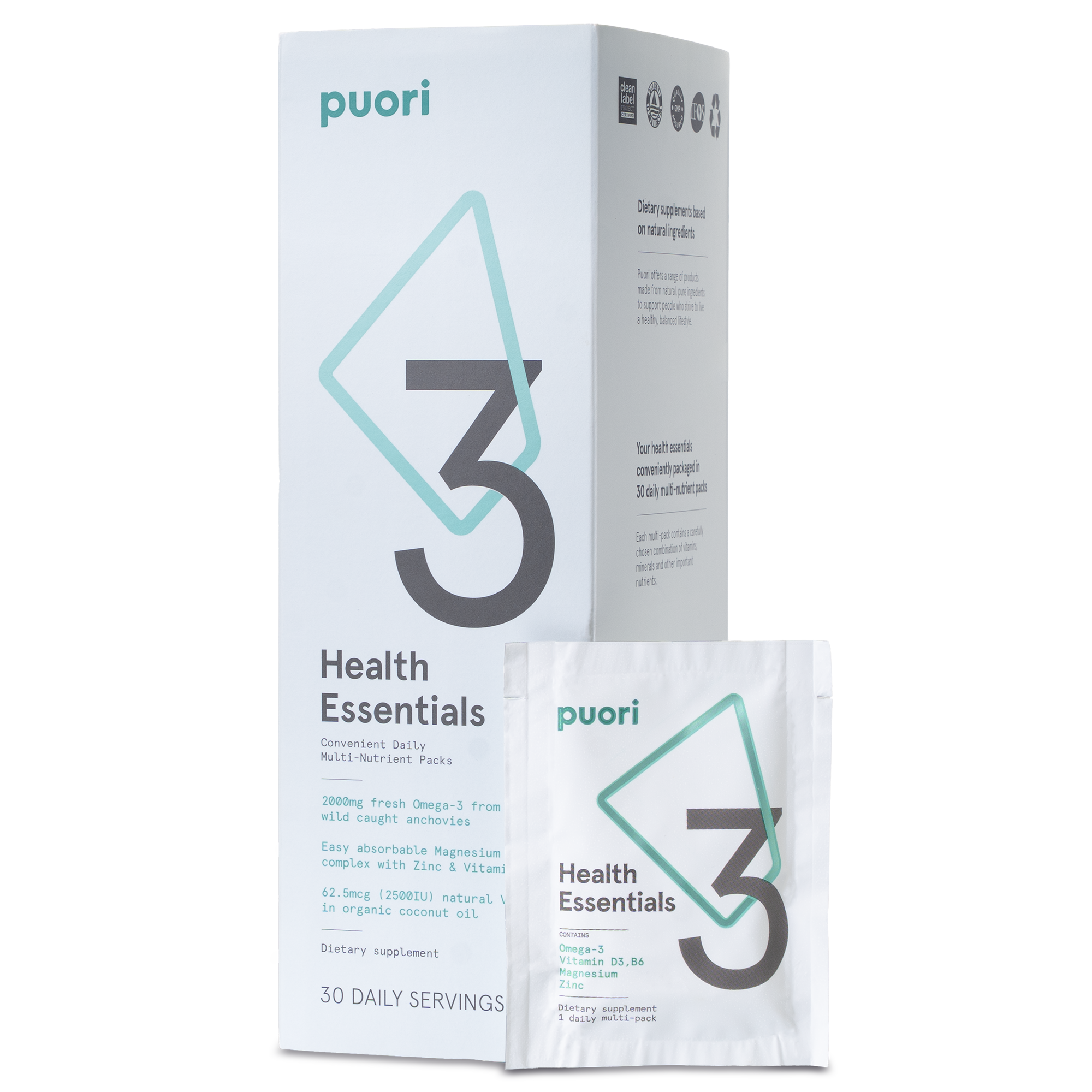
P3 - Health Essentials Sachets (O3, M3, D3)

Supports

Supports O3 benefits,Supports M3 benefits,Supports D3 benefits
Subscription $72.25
One-time
$85.00

What is Omega-3 Good for?

Omega-3 fatty acids support heart, brain, and eye health while helping regulate inflammation in the body.

If you're wondering what omega-3 does, these essential fats play crucial roles across multiple physiological systems and are considered foundational nutrients for overall health.

Your body relies on omega-3s - particularly EPA (eicosapentaenoic acid) and DHA (docosahexaenoic acid) - for optimal function, yet cannot produce sufficient amounts on its own, making dietary sources or supplementation important.

Brain function and cognitive health: DHA comprises a significant portion of brain tissue and supports memory, mental clarity, and cognitive performance throughout life. Consistent omega-3 intake also helps support healthy neural communication.

Heart and cardiovascular support: EPA and DHA support cardiovascular health and help maintain healthy triglyceride levels already within the normal range. Omega-3s are widely recognized as foundational nutrients for long-term heart health.

Inflammation balance: These essential fatty acids help regulate the body's inflammatory response, supporting recovery after exercise and promoting joint comfort. Rather than suppressing inflammation entirely, omega-3s help maintain a healthy balance.

Eye health and vision: DHA is an important structural fat in the retina and helps support visual function and long-term eye health.

Omega-3s are one of several nutrients that play important roles in brain and heart health. Explore our Brain & Heart collection to discover complementary products designed to support cognitive function, cardiovascular health, and overall wellbeing.

How Much Omega-3 per Day Do You Need?

Recommended intake varies, but most adults benefit from a daily combined EPA and DHA intake depending on diet and health status.

Dietary versus supplemental sources: Whole food sources provide omega-3s alongside other beneficial nutrients, but achieving therapeutic levels through diet alone can be challenging. Quality supplements offer concentrated, consistent doses that ensure adequate daily intake.

Individual variation matters: Your omega-3 needs depend on several factors:

  • Current dietary fish consumption
  • Inflammatory status and physical activity levels
  • Age and life stage (pregnancy, aging)
  • Overall diet quality and omega-6 to omega-3 ratio
  • Specific health considerations

Our Puori O3 Fish Oil Capsules delivers a high dose of 2000mg omega-3 per serving with 1,250 mg EPA and 500 mg DHA a 2.5:1 ratio that reflects how these fatty acids actually work in the body. EPA leads the anti-inflammatory response, supporting heart health and mood, while DHA maintains brain and eye cell structure.

Because the body retains DHA more efficiently, you need less of it making an EPA-dominant formula the smarter, more targeted choice supporting general wellness with a higher focus on cardiovascular health and inflammation support.

Signs You May Need Omega-3

Recognizing omega-3 deficiency isn't always straightforward, but several common indicators suggest your intake may be insufficient:

Dry, flaky skin or brittle hair: Omega-3s help maintain skin barrier function and moisture retention. Persistent dryness, despite adequate hydration, often signals low essential fatty acid levels.

Low fatty fish consumption: If you eat fatty fish less than twice weekly, you're likely not meeting optimal omega-3 levels through diet alone. This is one of the most reliable predictors of deficiency in modern diets.

Fatigue and difficulty concentrating: While many factors affect energy and focus, inadequate omega-3 intake can impact cognitive function and mental clarity. Brain fog and reduced concentration may improve with supplementation.

High processed food intake: Diets heavy in processed foods typically contain excessive omega-6 fatty acids relative to omega-3s, creating an imbalanced ratio that promotes inflammation.

Poor sleep quality or mood changes: Emerging research suggests omega-3s play roles in sleep regulation and emotional wellbeing, though individual responses vary.

Omega-3: Inflammation, Stress & Recovery

Omega-3 fatty acids serve to help your body actively resolve inflammation rather than simply suppressing it.

Regulating inflammatory pathways: While inflammation is a natural and necessary immune response, chronic low-level inflammation can impact overall health. Omega-3s, particularly EPA, help the body's natural resolution of inflammatory responses.

Physical recovery: If you are an athlete or active individual, a higher daily dose may be recommended to support the body's natural inflammatory response and enhance recovery after intense exercise.

What is the Difference Between Omega-3 and Fish Oil?

Omega-3 refers to essential fatty acids (EPA and DHA) your body needs, while fish oil is a common source or delivery form of those omega-3s.

Understanding this distinction helps you make informed choices about supplementation:

Omega-3 is the nutrient: EPA and DHA are specific types of omega-3 fatty acids with distinct biological functions. These are the active compounds providing health benefits - regardless of their source.

Fish oil is the source: Fish oil is extracted from fatty fish tissue and contains omega-3s along with other fatty acids. It's one of the most bioavailable and well-researched omega-3 sources, but not the only option.

Quality and concentration vary significantly: Not all fish oils are equal. Concentration of EPA and DHA per serving, purity, freshness, and processing methods dramatically impact effectiveness. Low-quality fish oil may contain minimal omega-3s alongside oxidized fats and contaminants.

The key difference: When evaluating supplements, focus on the omega-3 content (EPA/DHA amounts) rather than total fish oil volume. A product listing "1,000 mg fish oil" may contain only 300 mg of actual omega-3s, while another provides 800 mg omega-3s in the same capsule size. Puori O3 Fish Oil Capsules deliver a high dose of 2000mg omega-3 per serving, including 1250mg EPA and 500m DHA.

Our Commitment to Clean and Tested Supplements

At Puori, transparency and purity aren't marketing claims - they're non-negotiable standards backed by rigorous third-party testing.

Third-party testing on every batch: Each production batch undergoes independent laboratory testing by the Clean Label Project for purity, potency, and contaminants including heavy metals, PCBs, and oxidation markers.

Batch-specific results are accessible via the QR code on every label.

IFOS 5-star certified fish oil: Puori O3 Fish Oil Capsules is tested by the International Fish Oil Standards (IFOS™) program for omega-3 content, purity, and freshness - including screening for heavy metals, PCBs, dioxins, and oxidation. Puori O3 has received the highest 5-star IFOS rating.

Responsibly sourced with Friend of the Sea certification: Our omega-3s are sourced from wild-caught small fish and certified by Friend of the Sea, an international standard for sustainable fisheries and marine protection. The certification supports responsible fishing practices designed to protect marine ecosystems, minimize bycatch, and promote long-term ocean sustainability.

FAQ