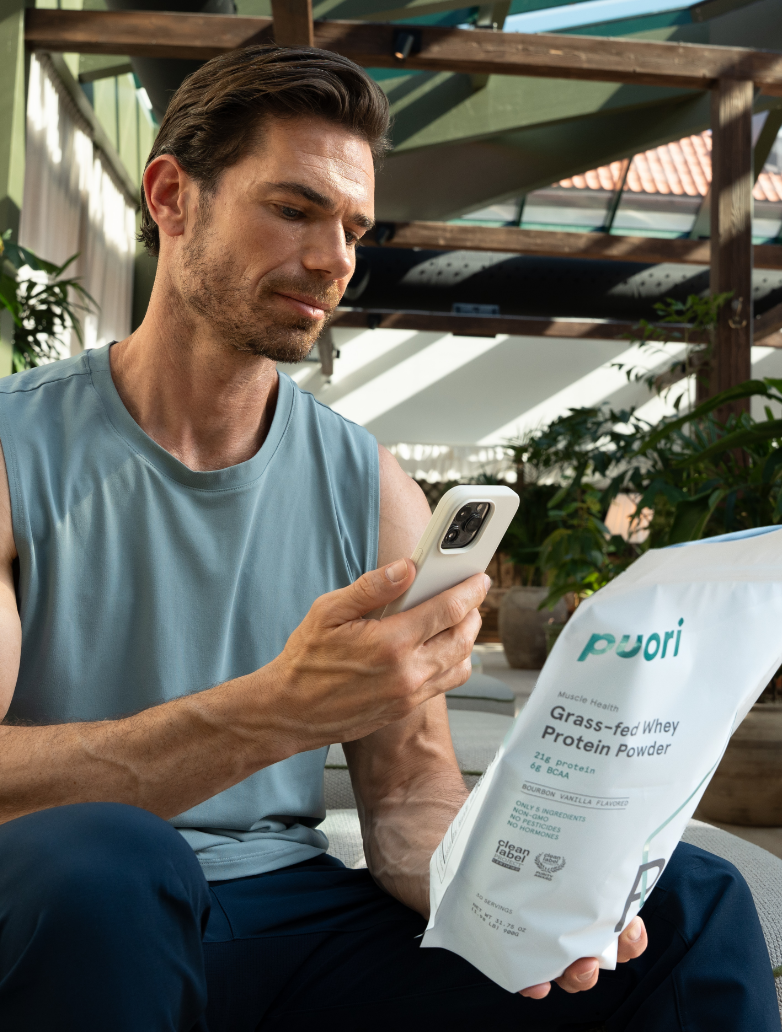
What Actually Makes a Protein Powder 'Clean'? Here's What the Data Shows
 Reading time: 11 min
Among the many terms used to market protein supplements, “clean protein powder” is one that often invites questions about what consumers are actually getting in a tub.
A 2024-2025 investigation by the Clean Label Project, an independent non-profit, found that a lot of America's best-selling protein powders exceed a federal or state safety threshold like Prop 65 for lead. Many of those products are marketed directly as clean protein powder. And until that study, most consumers had no way of knowing which brands were selling clean protein powder.
The investigation tested 160 protein powders from 70 brands, covering 83% of the US market, against thresholds for contaminants including lead. 47% exceeded at least one of them. 21% came in at more than double California's Proposition 65 limit. Many of the products involved are established, widely distributed brands, who create their own versions of clean protein powders.
Sales growth is part of why the clean protein powder conversation matters now. According to the Clean Label report, US protein powder sales surpassed $9 billion annually by 2023, and much of that growth will naturally be driven by daily consumption of protein powders rather than occasional use. But a level of contamination that may be less concerning with occasional exposure becomes a different consideration when a product is consumed every day.
Of the 70 brands tested, exactly one held full Transparency Certification from the Clean Label Project, the designation requiring every batch to be tested and every result published for public review.
That brand is Puori.
This article explains what that certification requires, what clean protein powder should mean as a matter of definition rather than marketing, and how to verify any brand's claim to it, our own included.
The Three Things That Actually Make a Clean Protein Powder
There is no legal definition of "clean protein powder," and no regulatory organization verifies the term before a brand applies it to a label. That absence of oversight is precisely why the word has become a marketing term rather than a regulated claim.
Our experience building Puori's own clean protein powder has shown us that a genuinely clean product comes down to three things. We've built our formulation around them from the very beginning.
1. A protein source you'll recognize from your own kitchen.
That third point is where part of the industry stops. Some brands will tell you their products are third-party tested and that they are clean protein powders. But only a handful publishes their results.
As of now, we're the only protein brand that's earned full Transparency Certification for meeting all three of these standards, on every product and on every single batch.

Where the Contamination Actually Comes From
It's tempting to read a stat like 47% and picture careless factories cutting corners. But that rarely gives you the full image.
Heavy metals like lead, arsenic, and cadmium occur naturally in soil, water, and the wider environment, long before any ingredient reaches a manufacturing line. A pea crop grown in soil with higher natural metal content carries that contamination with it no matter how carefully the rest of the product gets made afterward.
According to the Clean Label Project, this is a big part of why plant-based protein powders test higher on average than whey. Pea or rice protein isn’t inherently worse for you. Those crops simply just pull more out of the ground they grow in. The data shows this clearly: plant-based powders tested at five times the cadmium levels found in whey-based ones.
That same logic is why "organic" isn't the safeguard it sounds like. Organic certification governs farming practices like pesticide use, not the heavy metal content already presents in soil, and most organic protein powders are plant-based to begin with. So the two factors compound rather than cancel out: certified organic protein powders, on average, tested three times higher for lead and twice as high for cadmium compared to non-organic products in the same study.
Flavoring adds its own layer on top of the protein source itself. Cocoa is one of the most heavy-metal-prone ingredients in the entire food supply, largely because of soil conditions in cocoa-growing regions.
That's why your chocolate protein shake is statistically more likely to test higher in heavy metals than your vanilla one, regardless of which brand made either tub. The Clean Label Project found chocolate-flavored powders averaged four times more lead, and a striking 110 times more cadmium, than vanilla-flavored ones.
How to Check If You Have Clean Protein Powder
-
Start with the certificate of analysis. A trusted one comes from an independent lab, and lists actual measured contaminant levels rather than a simple pass or fail. If a brand only produces this on request instead of publishing it upfront, that absence is itself the data point.
-
Look at whether testing happens per batch or per product line. These sound similar but aren't. Testing one sample from a product line once a year says almost nothing about the specific tub on your counter right now. Testing every batch, and publishing results tied to the exact lot number on that tub, is the standard that actually protects you.
- Look for a way to trace a specific batch back to its own test results. A QR code or lookup tool tied to the exact tub in your hand is verifiable. A general statement about a brand's testing philosophy is not the same claim, no matter how it's worded.
Working through these checks is the fastest way to tell a genuine clean protein powder from one that is only labelled as one.
Curious about Puori and our values about transparency? Read our article “Transparency by law is coming” to learn more, or see exactly how Puori's own testing holds up against the Clean Label Project's findings.
The Transparency Certification Behind Our Clean Protein Powder Claim
Every batch of every product we make at Puori gets sent to an independent lab and tested against more than 200 contaminants, including heavy metals and pesticides. We measure against California's Prop 65 thresholds as our benchmark, which sit well below the more lenient federal minimums most brands work to instead. This is exactly what a clean protein powder claim looks like when it's actually backed by data rather than just a label.
Every product we sell carries a QR code linking straight to the results for that specific batch. You scan it, and see the actual numbers tied to the tub in your hand.
We also keep track of all batches and upload their test results for our customers to see and reference. For example our PW1 Whey Protein. Find your batch number and click the link. Now you’ll see all the test results for that exact batch.
This level of transparency is noted by The Clean Label Project. Out of 70 brands tested across the entire market, we're the one holding full Transparency Certification. This doesn’t mean the bar is impossible to clear. But clearing it means testing every batch and publishing every result without exception. Including the ones that don't look flattering.
As Jaclyn Bowen of the Clean Label Project puts it:
'The food industry owes their customers an open, honest, and transparent view of how clean their ingredients are. Consumers are purchasing supplement and protein products for health and performance, they expect the products to be clean.'
That expectation is exactly what Transparency Certification is built to answer, batch by batch, rather than with a single claim on a label.
Most brands haven't chosen to take that on yet. But we believe this is the most credible definition of clean protein powder.
FAQ
What is the cleanest protein powder?
There's no single universal answer, since a clean protein powder depends on ingredient sourcing and testing transparency together. What you can check objectively is whether a brand publishes independent, batch level test results against heavy metals and other contaminants.
Explore our clean protein powders.
How to look for the best protein powder?
A genuinely clean protein powder is defined by what a brand is willing to test and publish. Look for a brand that publishes independent, batch level test results against heavy metals, pesticides, and other contaminants, rather than a general purity claim on the label.
That standard applies regardless of which protein source or brand you choose. What works best for you depends on individual factors, including lactose tolerance, a preference for plant-based sources, or a specific protein target per serving.
At Puori, we hold full Transparency Certification from the Clean Label Project across every product we sell, which is the most direct way to confirm the safety half of that question for any brand, including ours.
What are the top 5 healthiest proteins?
There is no single healthiest protein. Research scores protein on four things: whether it carries all nine essential amino acids, how well the body absorbs it, how much processing it went through, and what else arrives in the same scoop. Five options hold up on those criteria.
- Whole food protein. Eggs, fish, dairy, lentils. A powder supplements a diet, it never replaces one.
- Grass-fed whey concentrate. Complete amino acid profile, high in leucine. Un-instantized concentrate is the least processed form of whey, so the native proteins stay intact. It contains lactose.
- Whey with collagen. Collagen on its own is incomplete. Paired with whey it covers the full amino acid profile and supports connective tissue as well as muscle.
- Pea protein. The most practical complete plant option, dairy free and easily digested. Plants pull heavy metals out of the soil, so testing matters more here, not less.
- Collagen peptides. Low in one essential amino acid, so use it alongside a complete protein rather than instead of one. Plays a role in maintaining joints, bones and skin.
None of this makes a protein source automatically into a clean protein powder. Nutritional quality and contaminant testing are separate things to check.
How do I choose the right protein powder?
Start with your own constraints rather than a brand's marketing. Four questions get you most of the way.
Dairy or no dairy? Whey is the most researched protein for muscle support and recovery. Pea protein does the same job without the dairy.
What is it for? Hitting a daily protein target, recovering from training, and supporting joints and skin are different problems.
How will you use it? Flavoured powder is built for a shaker. Unflavoured is the better buy if it's going into coffee, porridge or baking.
What is doing the sweetening? Read the ingredient list rather than the front of the label. Then apply the three checks that define a clean protein powder generally: a recognizable protein source, no unnecessary additives, and independent batch level testing you can verify yourself. That last check takes about thirty seconds. Find the batch number on the tub you own and try to pull up its result. Your own batch, tested against 200+ contaminants, is a testing program. One certificate from an unnamed batch several years ago is a marketing asset. Price and taste matter, but only after the product is safe and suits your body. That is what separates a clean protein powder from a well-marketed one. These statements have not been evaluated by the Food and Drug Administration. This product is not intended to diagnose, treat, cure, or prevent any disease.
These statements have not been evaluated by the Food and Drug Administration. This product is not intended to diagnose, treat, cure, or prevent any disease.
References

Written by Chris
Head of Product, Puori


